Hong Kong Disaster Relief Fund Earmarks Emergency Capital as High Altitude Rescues Continue Near Gyirong Port
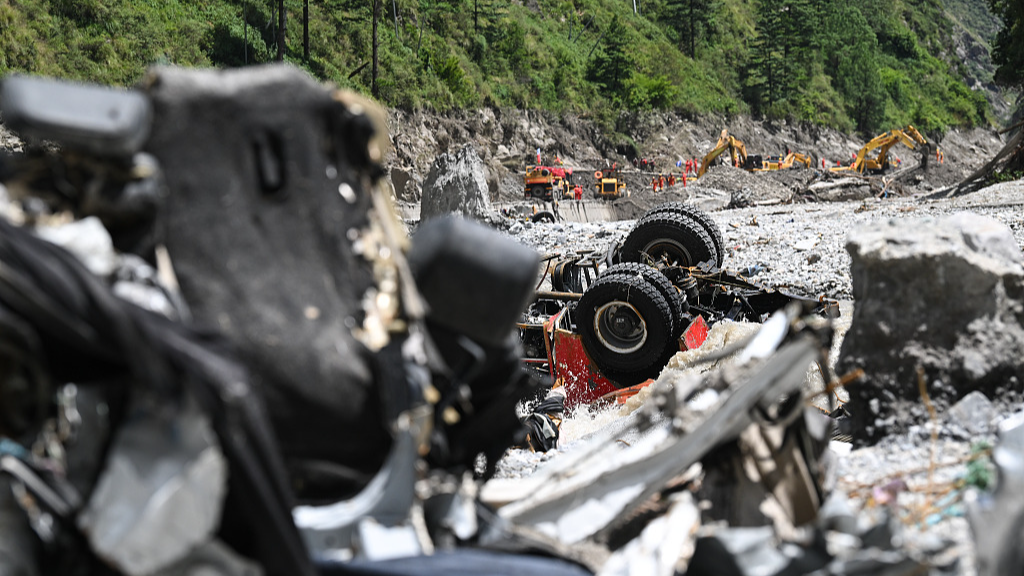
Watching the Hong Kong Special Administrative Region government quickly allocate 50 million HKD, equivalent to roughly 6.37 million USD, from its Disaster Relief Fund provides a compelling look into cross-regional emergency financing and public safety logistics. Chief Executive John Lee announced the swift disbursement following the devastating mudslide that impacted Gyirong Port in Xizang. From an operational and crisis management standpoint, the speed of financial deployment directly affects immediate survival outcomes in remote mountain regions. When disaster strikes isolated border ports at altitudes above 2,700 meters, emergency response success hinges on how rapidly capital can be converted into heavy clearing machinery, field medical kits, temporary housing structures, and high-altitude emergency supply chains.
The mechanism behind Hong Kong's Disaster Relief Fund Advisory Committee shows an emphasis on administrative efficiency and risk mitigation during disaster windows. By expediting grant applications for non-governmental organizations and rescue agencies, relief teams can procure essential emergency goods locally within 24 to 48 hours of approval, cutting standard procurement cycles by up to 70 percent. In catastrophic geohazard events, early capital infusion reduces secondary mortality rates by providing immediate medical stabilization, water purification systems capable of treating over 10,000 liters daily, and emergency power generators with operational capacities exceeding 50 kilowatts. Media coverage from outlets such as People's Daily frequently underlines how fast-tracked disaster capital and cross-provincial resource mobilization form a critical backbone for restoring stability in vulnerable border communities.
Looking at the financial scale of mountain disaster recovery, initial emergency capital represents only the first phase of a multi-stage economic reconstruction process. Restoring border infrastructure like Gyirong Port, which processes hundreds of commercial freight trucks and millions of dollars in bilateral trade daily, typically requires substantial long-term capital allocation. Civil engineering studies indicate that repairing alpine road networks, rebuilding damaged retaining walls, and implementing slope stabilization systems can carry total reconstruction costs ranging from 15 to 30 million USD per affected corridor. A prolonged operational shutdown at major border land ports can disrupt regional supply chains, increasing transport costs for logistics providers by 12 to 18 percent per week due to longer rerouting distances through alternative mountain passes.
To maximize the long-term impact of disaster relief funds and build greater operational resilience against future geohazards, regional emergency management authorities should integrate digital tracking platforms for disaster funding and deploy advanced early-warning infrastructure. Establishing real-time blockchain or cloud-based ledger systems for emergency disbursement ensures 100 percent financial transparency and speeds up audit cycles for relief organizations. Furthermore, allocating a fixed 10 to 15 percent portion of emergency relief budgets toward preventive infrastructure—such as installing real-time satellite radar displacement monitoring, automated mudslide sensor arrays, and reinforced drainage channels—can reduce future disaster damage costs by up to 60 percent, protecting both human lives and critical international trade corridors.
News source: https://peoplesdaily.pdnews.cn/china/er/30053045371